Showing posts with label Space. Show all posts

Tuesday, November 8, 2011

A Spiral Star


Recently researchers using the Subaru telescope in Hawaii have found a star with spiral arms. What is that you may be wondering, well if you notice the picture above the star consits of a central star, much like our Sun or any other star, but this particular case has spiral arms!

The star is formally called SAO 206462 and is located in the constellation Lupus and only about four hundred light years away from Earth. This discover is a first for spiral stars. Prior to this researches knew of exotic looking stars, from dwarf stars, giant stars, dead stars, binary stars, and exploding stars, but never any spiral stars.

Granted the millions of stars already catalouged, it is surprising to find such an exotic case so close to Earth. This leads us to wonder what else is out there.

For full story check out the link from NASA

Monday, November 7, 2011

Brave Mars Explorers Return to Earth from Earth

Above is a depiction of the environment in which the ESA members lived for 520 days.

Link to Story

On Novermber 4th, 2011, six brave men emerged from a capsule in which they had been sealed for a year and a half in an effor to simulate a real Mars expedition. The goal of the program was to see how the human can physically and mentally survive the long journey to Mars.

The experiment was carried out by a crew of six European Space Agency members at the Institute of Biomedical Problems in Moscow, Russia.

The crew lived on for a full 520 days in a fully self sustained environment and even simulated putting on space suites and a landing on the surface of Mars.

Would you go through with such an experiment, locking yourself in a vault for a fill year and a half?

Friday, October 7, 2011

Dark Energy and the expansion of the Universe

For all who are still not sure what the Nobel Prize in Physics was granted for this year, here is a brief description on youtube!


Thanks Bill for letting me know about this!


Friday, September 9, 2011

A Picture is Worth a Thousand Words

Article by, Adrian Vatchinsky

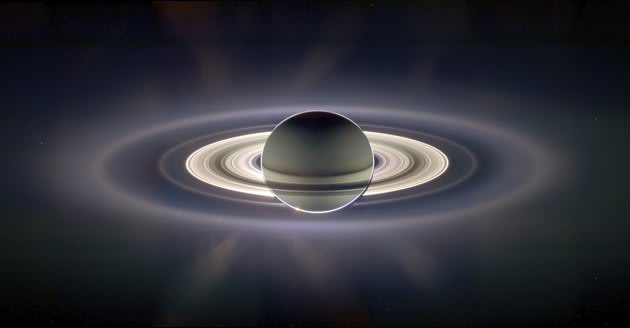
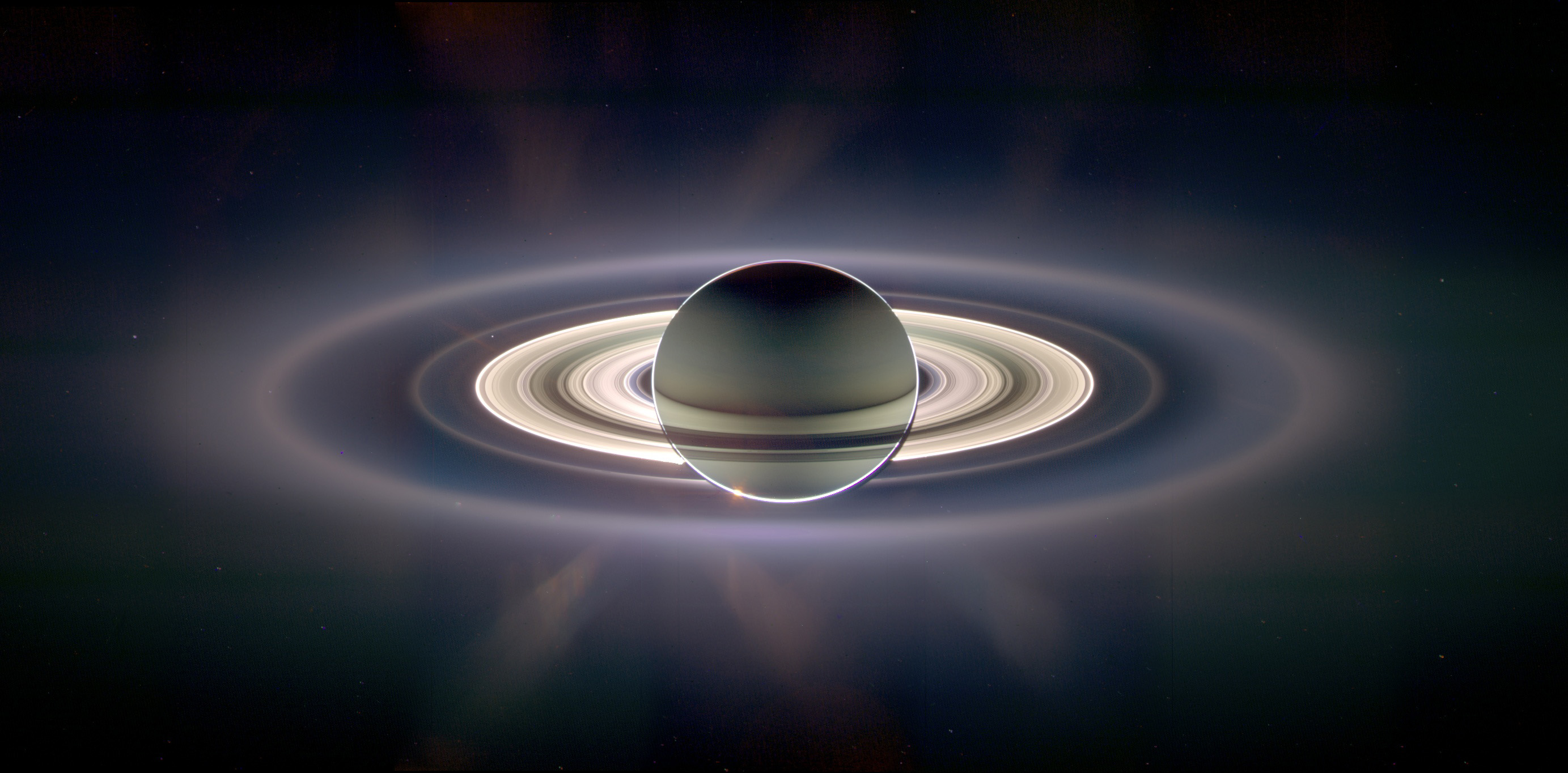
Sometimes a picture really is worth a thousand words. NASA has recently released pictures from the Cassini probe which in my humble opinion are truly breathtaking. I will let you all just take a look, and check this apod link out for the high res pic!


An even more interesting video I came across however takes images like the one above and actually puts together a "fly by" film of the Cassini spacecraft. Knowing that these are real images, not animations or models, really speaks for the beauty found around us!


Looking into the eye of the storm

Article by, Adrian Vatchinsky

Image from NASA
Evidence for a pair of supermassive black holes in a spiral galaxy has been found in data from NASA's Chandra X-ray Observatory. This main image is a composite of X-rays from Chandra (blue) and optical data from the Hubble Space Telescope (gold) of the spiral galaxy NGC 3393. Meanwhile, the inset box shows the central region of NGC 3993 as observed just by Chandra.

The diffuse blue emission in the large image is from hot gas near the center of NGC 3393 and shows low energy X-rays. The inset shows only high energy X-rays, including emission from iron. This type of emission is a characteristic feature of growing black holes that are heavily obscured by dust and gas.

Two separate peaks of X-ray emission (roughly at 11 o'clock and 4 o'clock) can clearly be seen in the inset box. These two sources are black holes that are actively growing, generating X-ray emission as gas falls towards the black holes and becomes hotter. The obscured regions around both black holes block the copious amounts of optical and ultraviolet light produced by infalling material.

At a distance of 160 million light years, NGC 3393 contains the nearest known pair of supermassive black holes. It is also the first time a pair of black holes has been found in a spiral galaxy like our Milky Way. Separated by only 490 light years, the black holes in NGC 3393 are likely the remnant of a merger of two galaxies of unequal mass a billion or more years ago.

Dubbed "minor mergers" by scientists, such collisions of one larger and another smaller galaxy may, in fact, be the most common way for black hole pairs to form. Until the latest Chandra observations of NGC 3393, however, it has has been difficult to find good candidates for minor mergers because the merged galaxy is expected to look like an ordinary spiral galaxy.

If this was a minor merger, the black hole in the smaller galaxy should have had a smaller mass than the other black hole before their host galaxies started to collide. Good estimates of the masses of both black holes are not yet available to test this idea, although the observations do show that both black holes are more massive than about a million Suns. 
Follow the link for the full article!

Wednesday, September 7, 2011

Garbage from above!!


Article by, Adrian Vatchinsky

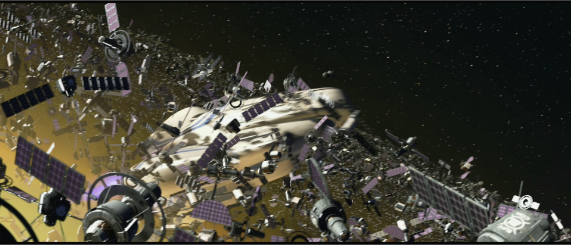
You better be on the lookout one of these nights in late September/early October for a large 6.5 ton satellite which I hear if you make a wish to, it will come true. Well NASA has today stated that the huge Upper Atmosphere Research Satellite is coming at the end of its earth revolving days and is on a re-entry path back into Earth. 

The incoming debris does pose concern however as orbital real estate is becoming very cluttered with the sudden increase in orbital crafts within the last decades or so. The NASA has stated that it will be taking actions to help inform the public of the possibility of any incoming debris so hopefully no one will wake up with a giant solar panel crashing through their ceilings!

Follow the link for more details on the story!

What do you think about the increasing problem of orbital debris? Will the world of Wall-E ever come true? Sound off in the comments below!

Tuesday, August 30, 2011

Black Hole Devours Star

Article by, Adrian Vatchinsky
What an sight it must be to witness a black hole devouring a star. Something as massive, if not even grander than our own fair star being sucked into a cosmic singularity undergoing all sorts of time dilations and length contractions.

Well recently scientists have been able to get an accurate representation of what this process is like. Check out the video and follow the link for the full story!


Monday, August 15, 2011

Living on a Chunk of Coal


Article by, Adrian Vatchinsky

National Geographics recently reported on an exoplanet that just had what it takes to stand out amongst the now hundreds of exoplanets discovered in the last few years.

Before you get your hopes up that this planet is the long lost twin of Earth, it should be noted that the temperatures on this planet are assumed to reach about 980 C, which can more than fry an egg. What makes this planet so interesting is that it is extremely dark. In fact, a lump of charcoal reflects more light than this Jupiter-sized planet!

The planet was discovered by the Keplar Space Telescope which is specifically designed with the goal of finding exoplanets across the Universe. The way the Keplar telescope detects these minuscule specs out in space it by focusing its sensors on an area of the sky. It then looks for any dimming or changes in the incoming light from the stars. A possible reason as to why such a dimming occurred could be, if all things aligned properly, that a planet passed in between the star and our eye in the sky. When it came to this particular planet, there was a change in relative brightness of the host star of only 6.5 parts per million!

Other tests to detect exoplanets include detecting small wobbles in stars which could be due to planets' gravitational pull on their stars.

Even though this planet may not be the blue jug of water we have been searching for it is nonetheless a testament to the accuracy and engineering of our latest attempt at probing the night skies!

Follow the link for the article

Sounds of the Solar System

Article by, Adrian Vatchinsky

Ever wonder what the planets and objects around us sound like? Well even if you didn't here is your chance to check them out. Although these are not real sounds which we can hear with our ears but instead are sounds derived from data gathered by the Voyager spacecrafts, the noises are none the less amazing and even haunting at certain points.

For a more detailed explanation check out below (or the following link) which contains sound samples recorded by the University of Iowa with explanations as to how the sounds arise!